What Are Mala Beads? Meaning, the 108, and How to Choose One
What are mala beads used for?
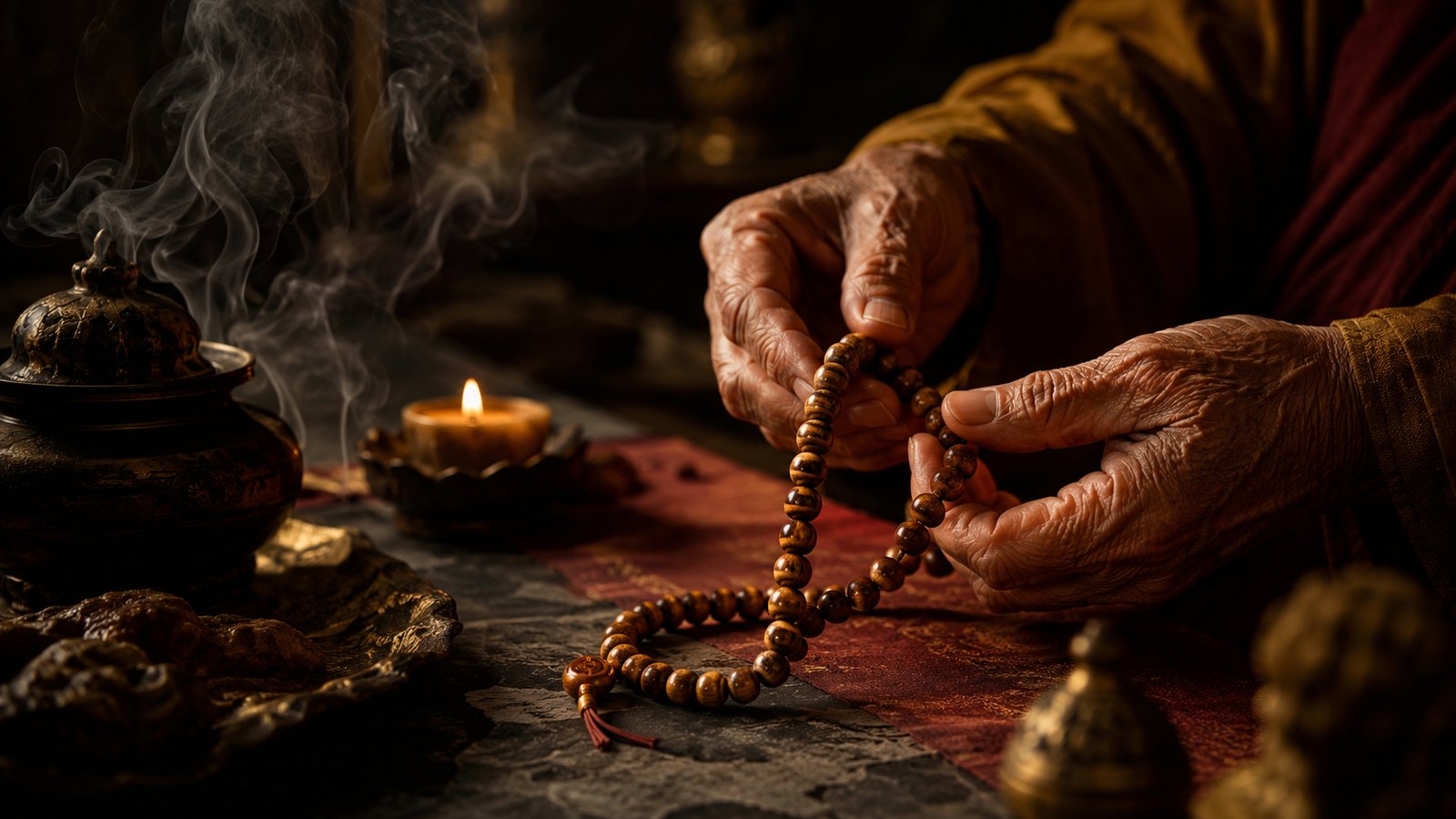
At their simplest, mala beads are a counting tool. As you repeat a mantra or follow your breath, you move one bead at a time between your fingers. The beads keep the count so the mind can stay with the practice rather than the arithmetic. Many people also wear a mala simply as a daily reminder of an intention — calm, focus, gratitude — touching it when they need to return to it.
Why 108 beads?
A full mala has 108 beads. The number recurs throughout Buddhist, Hindu and yogic tradition, and one round of 108 repetitions is a classic unit of practice. A wrist mala uses a fraction of that count — usually 18, 21 or 27 — so the math still works: three rounds of 36, or four rounds of 27, complete the 108.
| Type | Beads | Worn as | Best for |
|---|---|---|---|
| Full mala | 108 + guru | Necklace / held | Seated mantra practice |
| Wrist mala | 27 | Bracelet (wraps) | Practice + everyday wear |
| Wrist mala | 21 | Bracelet | Everyday wear, gifting |
| Wrist mala | 18 | Bracelet | Slimmer wrists, layering |
The guru bead
The larger bead is the guru bead (母珠, the 'mother' bead). It marks the start and end of the loop. In traditional practice you don't cross over it — when you reach it you pause and reverse direction.
How to choose a mala
Choose by intention first, then material, then size:
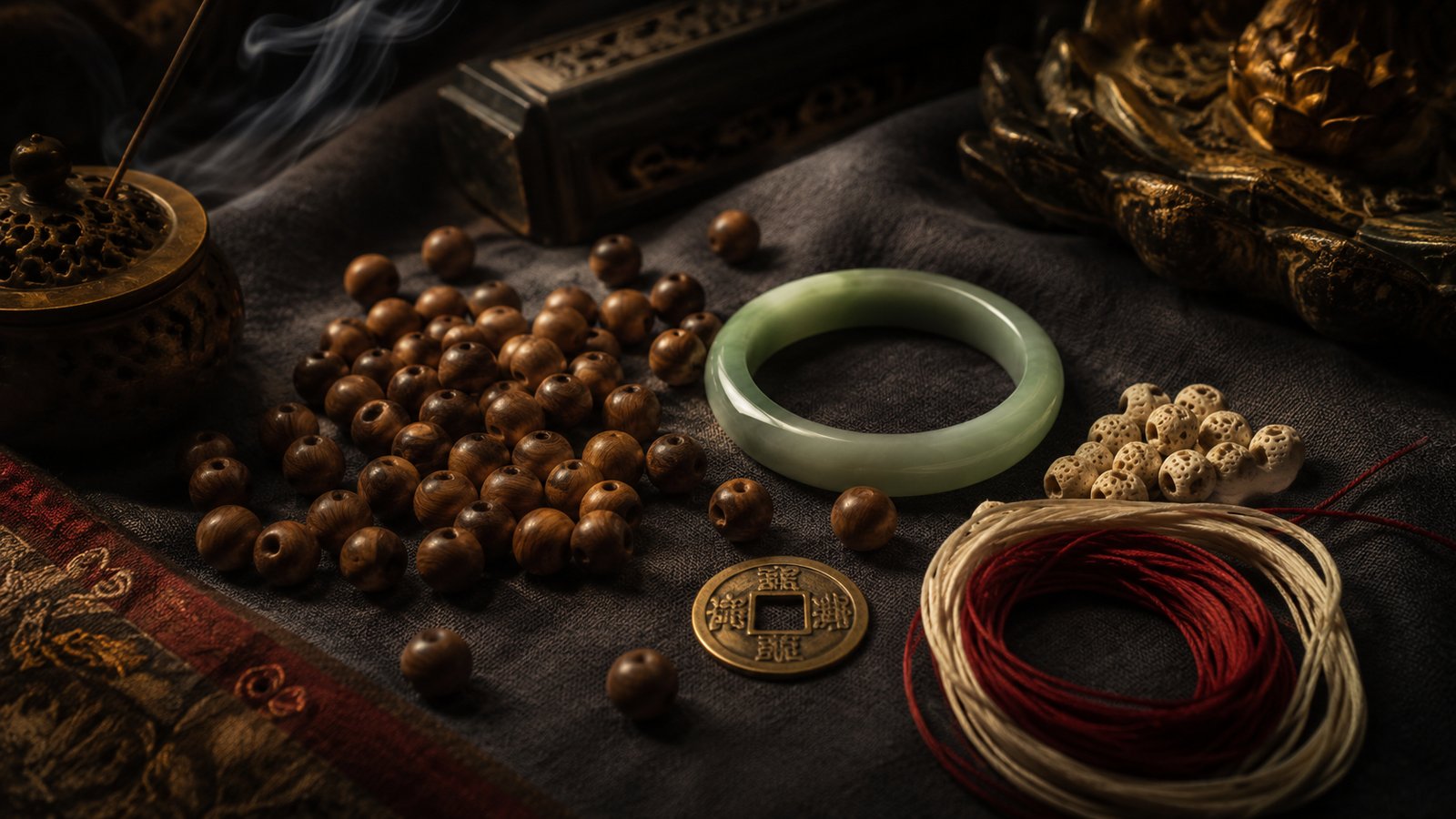
- Calm & focus — sandalwood or agarwood, the fragrant 'woods of stillness'.
- Wisdom & practice — bodhi seed, the classic meditation bead.
- Protection — black obsidian or peach wood.
- Abundance — fortune coins, citrine, or a Pixiu guardian.
- Connection — lotus seed, the emblem of compassion.
For meaning beyond the material, look for a mala that has been consecrated — blessed in a traditional ceremony — and that can tell you where and by whom. That provenance is the difference between a bead and a touchstone.
Can anyone wear one? Yes. You don't have to be Buddhist to wear a mala respectfully; many people simply value the calm, the craftsmanship and the reminder it carries. What matters is wearing it with intention and respect for the tradition it comes from.
Frequently asked
Mala beads are used to count mantras or breaths during meditation — you move one bead per repetition. Many people also wear them as a daily, tactile reminder of an intention such as calm or focus.
108 is a sacred number across Buddhist, Hindu and yogic tradition; one round of 108 repetitions is a classic unit of practice. Wrist malas use 18, 21 or 27 beads, fractions that still complete to 108.
No. Anyone can wear a mala respectfully. What matters is wearing it with intention and respect for the tradition it comes from.
The guru bead is the larger 'mother' bead that marks the start and end of the loop. In traditional practice you don't cross over it — you reverse direction when you reach it.